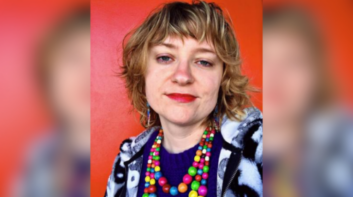


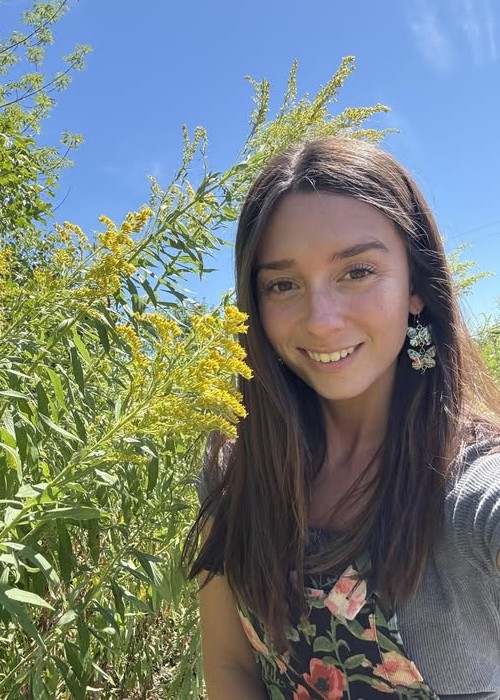

When Alexandra Fasulo’s Florida home was destroyed by Hurricane Ian in 2023, she unexpectedly found herself back in her hometown in rural upstate New York.
After the former freelance writer and entrepreneur purchased a beautiful parcel of land, however, she quickly discovered that the bucolic landscape was attracting more than aspiring farmers like herself. In fact, Fasulo uncovered a covert but fast-moving scheme to turn America’s most fertile farmground into industrial wasteland – all in the name of so-called “green energy.”
Fasulo told IW Features she found the property on Zillow shortly after moving back to New York.
“It looked like the prettiest land I’d ever seen in my whole life,” she said. “I went to go check it out because the pictures don’t necessarily tell you the whole story. But it was prettier than Zillow, which I’ve never seen happen before, so one thing led to another and I bought it.”
Fasulo said she didn’t know exactly what she wanted to do with her new property at the time, but after spending almost a year there and getting to know the local Amish population, an idea began to take shape.
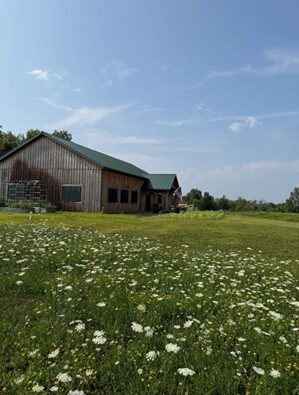
“The Amish built out my entire farm, which now has everything from a chicken coop to a farm stand to a driveway to a barn. And along the way, I just spent so much time outside with them, and I developed an awareness and attachment to all of the pollinators on the land,” Fasulo said. “It was unmowed, wild prairie and I wanted to leave it that way.”
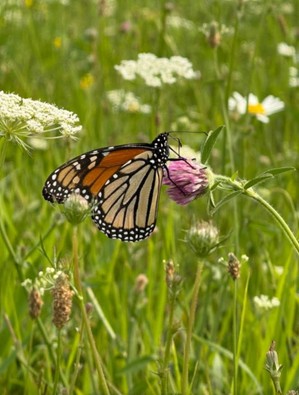
Fasulo said she dove into literature about pollinators and learned about the “insect apocalypse” that is taking place across the developed world today. On her Substack, “House of Green,” she reveals shocking statistics, such as a 60 to 70% honeybee colony loss in 2025, and the fact that there are 2.9 billion fewer birds in North America today compared to 1970. This is due to rapid urban development, pesticide use, and habitat loss, she said.
Pollinator extinction leads to lower crop yields and increased malnutrition, as pollinator-dependent crops like fruits and vegetables become rarer and more expensive. Left unaddressed, the rapid decline in North American pollinators will pose risks to the agricultural industry and food production.
Unfortunately, however, Fasulo soon realized that her home state not only didn’t care about preserving farmland and grassland—they were actively committed to destroying it in order to achieve politically expedient “green energy” goals.
“This past June, my neighbor across the street stopped in and said, ‘I just want you to know that I was offered really crazy amounts of money to sell my field to a solar farm, but I’m not going to,’” Fasulo recalled. “For a lot of people it’s hard for them to say no, because these companies are offering prices well beyond the market value of the land. They are definitely being pumped up with money, and that kind of piqued my interest.”
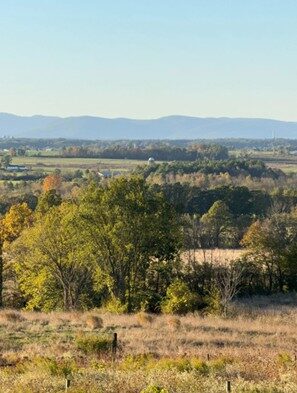
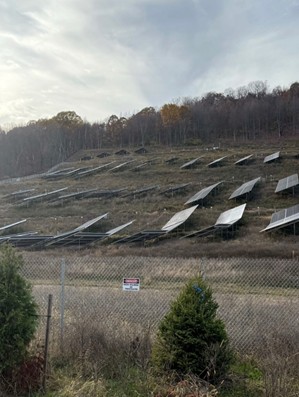
After talking with more community members, Fasulo realized that large solar corporations had targeted her town for a rapid takeover of farmland and grassland, encouraged by New York State’s incentive program for “green energy” development. At town hall meetings, she said, representatives from Californian and Canadian solar companies were present to lobby her small town into selling their historic farms, many of which have existed since before the Revolutionary War.
The impact on the community, its history, its ability to produce food, and the local wildlife would be devastating, she said. Even worse, she said the energy generated from solar “farms” in their rural town would be exported to New York City and would not benefit the local community in any way.
Also of primary concern to Fasulo is the future of young farmers in the United States. Although solar companies claim that land used for solar farms can potentially be recovered after several decades, solar “farming” is so new that no one really knows for sure. According to the Institute for Energy Research, solar farms necessitate clearing and leveling large swaths of land, leading to topsoil erosion that would make future attempts to farm the land extremely difficult.
The sheer amount of land needed for solar energy also poses a threat to America’s ability to feed itself. Independent Women Fellow Sarah Montalbano revealed that “wind and solar use ten times as much land per unit of power as natural gas or coal-fired plants.”
Essentially, young farmers like Fasulo are now forced to compete for land against multinational corporations that have no ties to the rural communities they are exploiting for cheap acreage.
“It would make the most sense to update our current grid and energy infrastructure on the sites that have already been set aside as industrial,” Fasulo said. “I’m against horizontal sprawl, as I call it, and I’m pro-vertical sprawl. To me, green energy could mean installing these solar panels over parking lots, parking garages, highways, ex-landfills, and failing malls.”
So why don’t they? According to Fasulo, the solar company representative present at her town hall meeting admitted that “farmland and grasslands are cheap for them. They don’t have to remove trees and prepare the site for the solar panels.”
She continued, “He also said that steamrolling small town boards is a lot easier than going through the zoning and permitting process of City Hall, or the State Department. It’s a lot easier to pressure small-town people to do what they want.”
Fasulo said she is not anti-solar power on principle and has installed a few panels over her barn for personal use. The problem, she said, is when corporations are allowed to devour America’s most fertile farmland and target struggling rural communities instead of installing panels in more responsible locations that do not threaten the environment or our agricultural future.
In an effort to equip small rural communities with the legal resources to stand up to solar corporations, Fasulo recently founded the American Land Rescue Fund, “a nonprofit organization using the power of law to defend America’s farmland, wildlife, and open spaces from industrial exploitation disguised as ‘green energy.’”
“True conservationism is not what is politically popular,” Fasulo said. “But what’s the point of having the lights on in your home if there’s no food?”